Lake Ohrid Diving
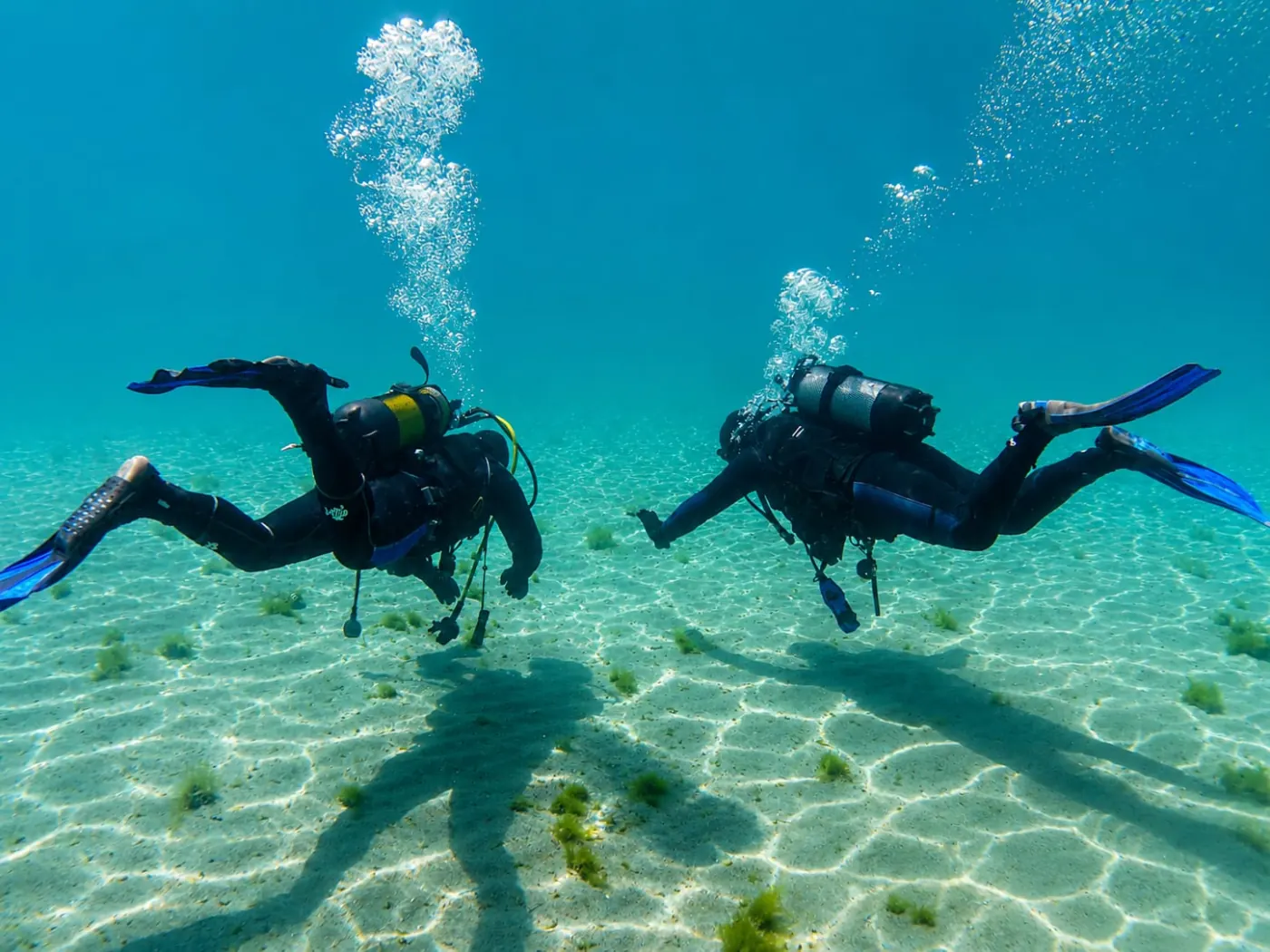
Scuba diving in Lake Ohrid
A complete guide to one of Europe's oldest, deepest, and most biologically unique lakes — visibility, temperature, sites, fauna, safety, equipment and the underwater archaeology that makes diving here unlike anywhere else.
Why Lake Ohrid is unique
A living museum under water
Lake Ohrid is one of the oldest lakes in the world. Geological studies place its age between 2 and 5 million years, which puts it in the same exclusive category as Lake Baikal in Siberia and Lake Tanganyika in East Africa. Most lakes on Earth are 10,000 to 20,000 years old — postglacial features that come and go on geological timescales. Lake Ohrid has been here since long before the last ice age, which is why it has been called a "living museum" of aquatic life.
The lake sits at 695 meters above sea level on the border between North Macedonia and Albania, in a tectonic graben between the Galičica and Mokra mountain ranges. It is 30 km long, up to 15 km wide, and reaches a maximum depth of 288 meters. Around two-thirds of the lake belongs to North Macedonia.
Because the lake has been isolated for millions of years, it has evolved an extraordinary level of endemism. Roughly 200 species are found only here — fish, crustaceans, sponges, snails, even endemic flatworms. UNESCO recognized this in 1979 by inscribing Lake Ohrid as a Natural and Cultural World Heritage Site, and again in 2019 expanding the protection to the Albanian side.
For a diver, all of this translates into one concrete thing: when you go down in Lake Ohrid, you are swimming through an ecosystem that exists nowhere else on the planet.
Visibility
Among the clearest fresh water in Europe
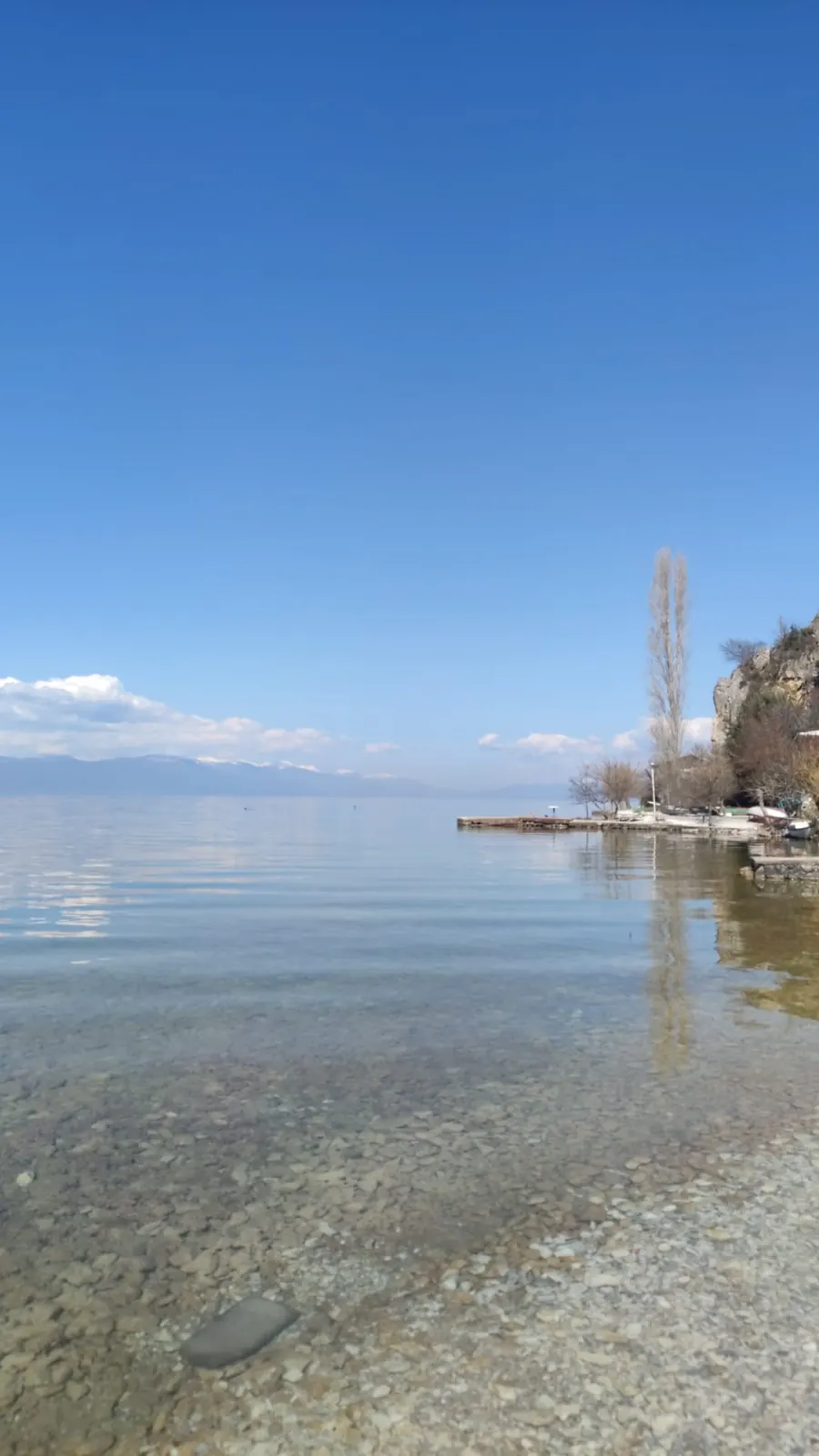
Underwater visibility in Lake Ohrid typically ranges from 10 to 22 meters, with the highest values in late spring (May–June) and early autumn (September–October). In good conditions divers report being able to see the bottom from the surface in shallow zones — the pebbles, the sand ripples, the occasional fish.
The exceptional clarity is driven by the lake's hydrology. Roughly half of the water comes from underwater karst springs — water that has filtered through limestone for decades, arriving cold, low in nutrients, and almost free of suspended sediment. This is also why the lake's ecosystem is so sensitive: nutrient pollution from agriculture or sewage doesn't get diluted, it accumulates.
Visibility can drop after heavy rain, in localized spring algae blooms, or near river mouths where the Drim, Sateska, and other tributaries enter. Most of our active dive sites stay clear most of the year.
Water temperature
Warm on top, very cold below the thermocline
Lake Ohrid behaves like a stratified mountain lake. The top layer (epilimnion) varies dramatically with the seasons: from around 5 °C in winter to a comfortable 23–26 °C from late July to early September. Surface temperature peaks in August.
Between roughly 10 and 15 meters depth, you hit the thermocline — a sharp temperature gradient where the warm summer surface water gives way to cold water below. Below the thermocline (the hypolimnion), the temperature is essentially constant year-round at 6–8 °C.
Practically, this means a 7 mm wetsuit and hood are enough for most recreational dives down to about 15 meters in summer. For dives deeper than 20 meters, or any dive at all from November to April, a drysuit is recommended. The thermocline is sharp enough that you can feel the temperature drop within a single fin kick.
A small upside of the deep cold layer: the water below the thermocline is exceptionally well preserved, which is part of why Lake Ohrid's underwater archaeology has survived in such detail.
Dive sites
Where to dive in Lake Ohrid
A short list of the locations Amphibia frequents — for training, ecological actions, and recreational dives. Each has a different character and skill level.
Kaj Divono
Depth: 5–25 m
A gently sloping pebble beach on the western shore, ideal for entry-level dives and training. Easy entry, calm water, mixed sandy/rocky bottom. Our most-used location for cleanup actions.
Ljubaništa
Depth: 5–30 m
Southwest shore near Saint Naum. Crystal-clear water, sandy floor, occasional reed beds. Excellent visibility on summer afternoons. Great for relaxed exploration and underwater photography.
Kalishta (Biser Beach)
Depth: 5–20 m
North shore near Struga. Mixed pebble and sediment bottom. The location of the international diving cleanup action that brings together clubs from Macedonia, Serbia and Croatia each year.
Bay of Bones
Depth: 3–6 m
Iron Age archaeological underwater site near Peštani village. The submerged remains of a Bronze Age pile-dwelling settlement (1200–700 BCE). Shallow, accessible to certified divers under regulation.
Saint Naum Springs
Depth: 3–15 m
The southern end of the lake fed by some 30 underwater karst springs. Extraordinary water clarity due to constant inflow of fresh, cold spring water. Protected — diving permits required.
Trpejca
Depth: 10–40 m
Steep underwater wall along the eastern shore. The most popular site for advanced divers — deeper drop-offs, occasional encounters with large Ohrid trout, and dramatic underwater topography.
Endemic species
Fish you'll see nowhere else
Around 17 species of fish live in Lake Ohrid, and of those a remarkable proportion are endemic — found nowhere else in the world. The most famous:
- Ohrid trout (Salmo letnica) — locally called letnica or belvica. A salmonid that has been evolving in isolation for over a million years. It can reach up to 70 cm in length and is one of the most important species for the lake's identity. Heavily protected; strict fishing quotas.
- Ohrid bleak (Alburnus belvica) — locally plašica. A small silvery fish whose iridescent scales are used to make the famous "Ohrid pearls".
- European eel (Anguilla anguilla) — historically migrated from the Sargasso Sea through the Drim and Black Drim rivers; now mostly restocked due to hydroelectric dams blocking the migration route.
- Macedonian carp (Cyprinus carpio), perch, chub, and several endemic minnows.
Beyond the fish, the lake hosts endemic sponges (Ochridospongia rotunda — a freshwater sponge that grows like coral and is found nowhere else), endemic flatworms, snails, and crustaceans. Quiet, patient divers spot these regularly.
Safety
Altitude diving in a freshwater lake
Lake Ohrid sits at 695 meters above sea level — high enough that altitude diving rules apply. Your dive computer should be set to altitude mode (most modern computers do this automatically). Standard sea-level dive tables are not safe to use as-is.
Other things to keep in mind:
- Cold water below 15 m. Thermal stress is the most common discomfort divers experience here. Don't underestimate it.
- Limited rescue infrastructure. There is no commercial recompression chamber on Lake Ohrid itself. The nearest hyperbaric facility is in Skopje (~3 hours by road). Plan conservative profiles.
- Diving permits and access. Some sites — particularly Saint Naum Springs and the Bay of Bones — fall within strictly protected zones. Diving without authorization is illegal and can damage fragile ecosystems and archaeological remains.
- Always dive with a club or certified operator. Local knowledge of currents, entry/exit points, and seasonal conditions is not optional here.
Standard buddy system, surface marker buoy on open-water dives, and a safety stop at 5 meters are non-negotiable on every Amphibia dive.
Equipment
What to bring (or rent locally)
You can rent the full kit from local diving operators in Ohrid, including Amphibia for organized dives. Here's what makes the difference between an OK dive and a great one.
Wetsuit / drysuit
7 mm wetsuit covers most summer dives down to ~15 m. For dives below the thermocline (10–15 m), where water stays 6–8 °C year-round, a drysuit is strongly recommended. A 5 mm wetsuit is fine for shore snorkeling and shallow training in July–August.
BCD + regulator
Standard recreational gear works well. Make sure your regulator's first stage is rated for cold water if you'll dive below the thermocline. A redundant air source (octopus) is required for all club dives.
Mask + dive light
Bring a low-volume mask and a backup. A primary dive light is recommended even for daytime dives — Lake Ohrid's deeper sections quickly lose ambient light, and a light helps inspect cracks where endemic fauna shelter.
SMB + line
A surface marker buoy (SMB) and reel are required on dives away from a clearly marked entry. Lake Ohrid has occasional boat traffic in summer — the SMB makes you visible from the surface.
Bay of Bones
Diving into the Bronze Age
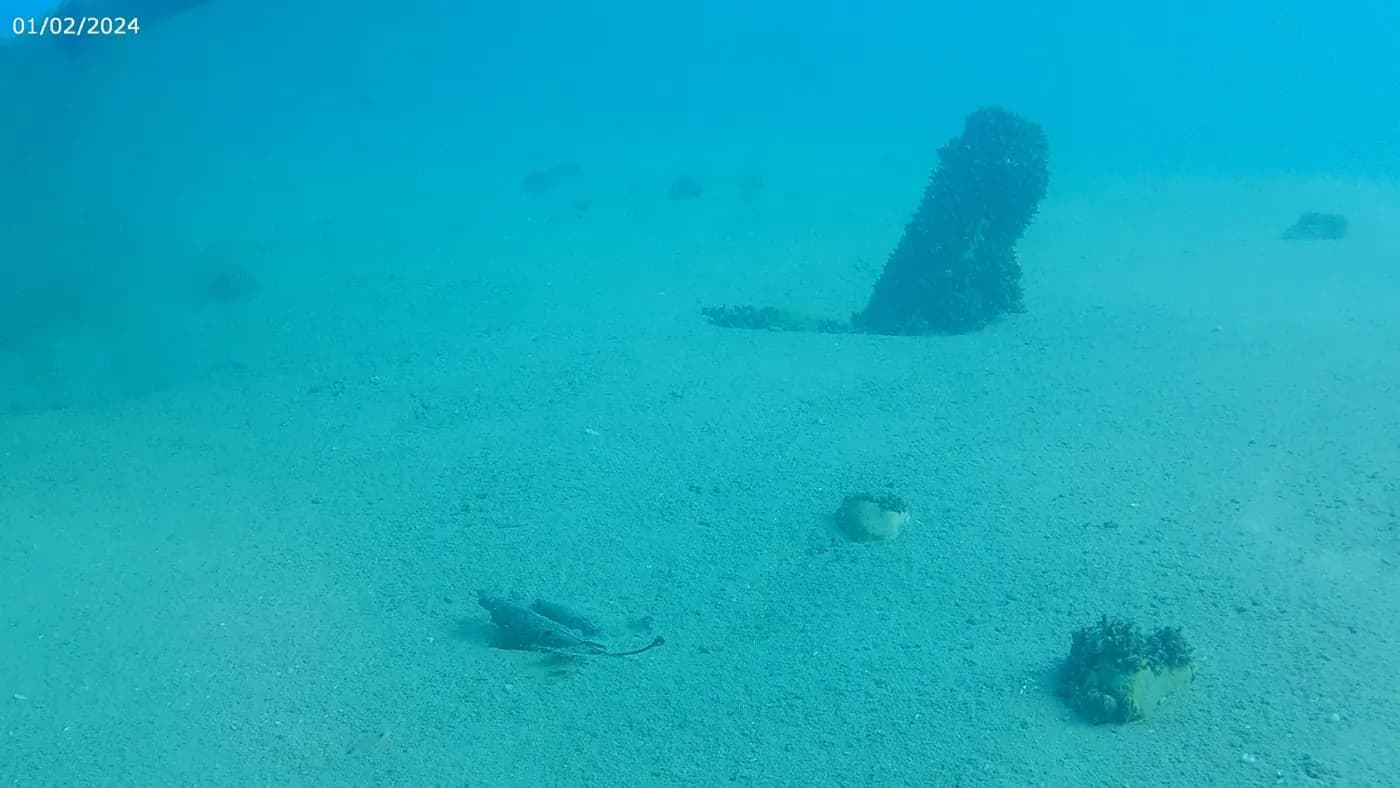
Near the village of Peštani on the eastern shore, in a shallow bay between 3 and 6 meters deep, lies one of the most remarkable archaeological sites in Europe: the remains of a prehistoric pile-dwelling settlement from roughly 1200–700 BCE.
Archaeologists have identified more than 6,000 wooden pile-stumps still standing on the lakebed — the foundations of a Bronze and Iron Age village built on a wooden platform above the water. The site got its name from the large number of animal bones recovered during excavation.
A reconstructed museum-platform stands on the surface above the original site, but the most authentic experience is below: a guided dive over the original stumps, the ceramic fragments, and the daily-life artefacts still preserved by the cold deep water.
Diving the Bay of Bones requires authorization and a certified guide. It is not a self-organized dive — the site is heritage-protected and access is controlled to preserve it for the next generation of researchers.
Underwater archaeology
More than one settlement on the lakebed
Bay of Bones is the most famous site, but it isn't the only one. The combination of stable cold water, anaerobic deep sediment, and continuous human settlement for at least 7,000 years means Lake Ohrid's bottom holds an unusually rich archaeological record.
Surveys have documented Roman-era amphorae and ceramic fragments, Byzantine-era anchor stones, and the remains of submerged Ottoman settlements that flooded over the centuries as lake levels fluctuated. Some sites are still being mapped — the most recent identified prehistoric pile-dwelling was confirmed by underwater survey in the last decade.
For divers, the etiquette is simple and absolute: look, photograph, leave everything where it is. Removing an artefact — even a single potsherd — is a serious offence under Macedonian heritage law and destroys irreplaceable context. Amphibia divers participate in collaborative mapping with the Heritage Office when invited, but never operate on heritage sites alone.
Frequently asked questions
Diving in Lake Ohrid — answers
Do I need a diving certification to dive in Lake Ohrid?+
Yes. To dive autonomously you need at least an Open Water Diver certification (PADI, SSI, CMAS, or equivalent). Without certification you can still experience the lake through a Discover Scuba Diving session with a qualified instructor — that's a guided introductory dive in a controlled shallow area, no certification required. Open-water courses can also be arranged with local operators directly on the lake.
What is the best time of year to dive in Lake Ohrid?+
Late May through early October is the most popular period. June and September are arguably the best — water temperatures are pleasant on top, visibility is at its peak, and there are fewer boats on the lake than in peak summer (mid-July to mid-August). Winter diving is possible for experienced drysuit divers, but the lake can develop morning mist and surface chop, so plan carefully.
Are there any dangerous animals in Lake Ohrid?+
No. Lake Ohrid is a freshwater lake with no sharks, no venomous fish, and no aggressive species. The largest fish you might encounter is the Ohrid trout, which is shy and will swim away long before you get close. The only real safety concerns are environmental — cold deep water, altitude, and the usual scuba risks.
How do I get to the dive sites?+
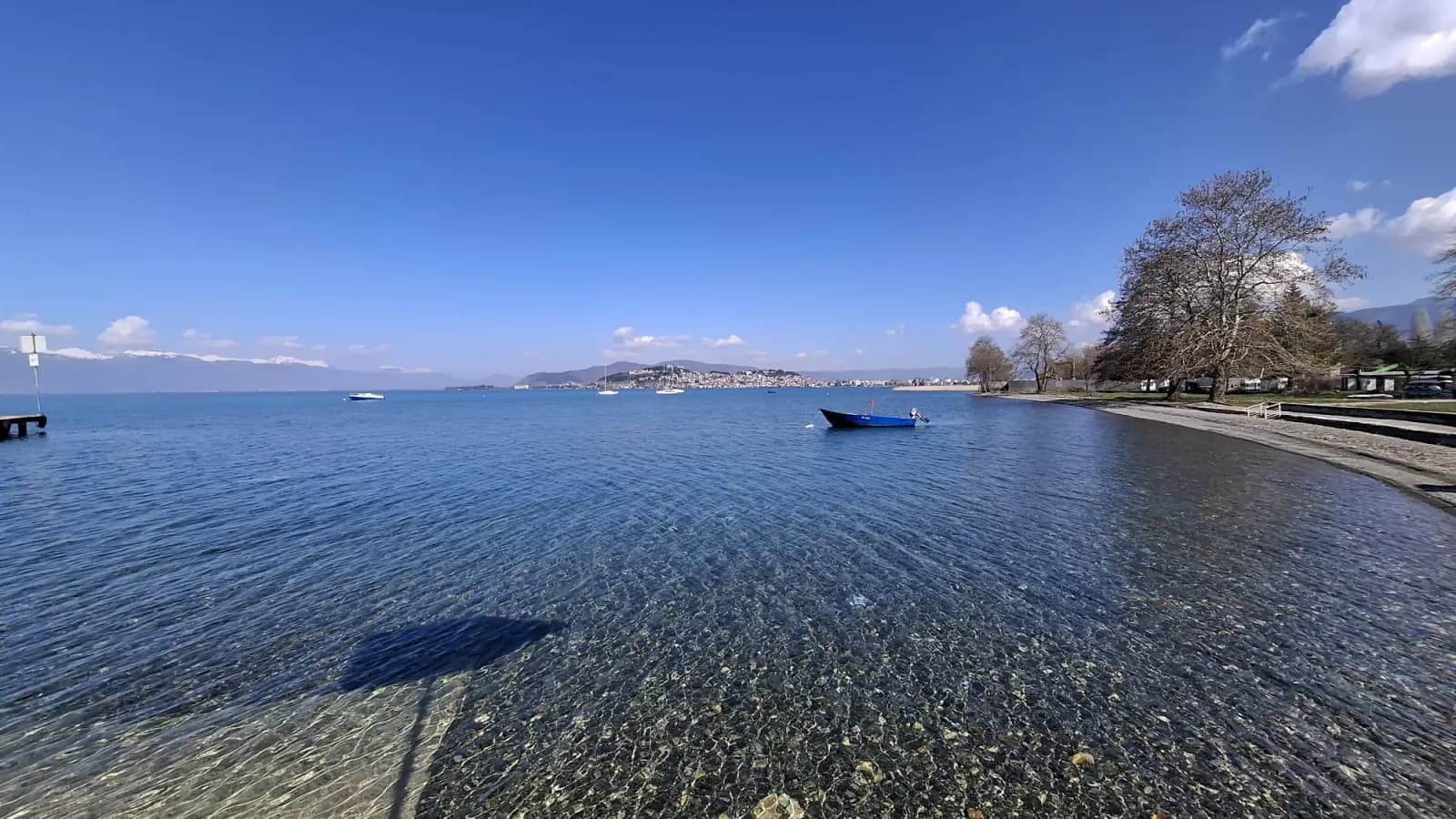
Almost all of our sites are shore-entry — you suit up on a beach and walk into the water. Kaj Divono, Ljubaništa and Saint Naum are accessible by car within 30 minutes of Ohrid Old Town. The Bay of Bones is also a short drive plus a boat or pier transfer. For sites along the steeper eastern shore (Trpejca, deep walls) we usually go by small boat.
Can I dive in the Bay of Bones on my own?+
No. The Bay of Bones is a protected archaeological site. Diving there is allowed only with prior authorization, a certified guide who knows the layout of the original pile-dwellings, and within strict rules about what you can touch (nothing) and bring back (nothing). Amphibia can help organize a properly permitted dive when conditions allow.
What kind of wetsuit do I need?+
In peak summer (July–August), a 5 mm wetsuit is comfortable for shallow shore dives. For any dive going below the thermocline (10–15 m), a 7 mm wetsuit with hood is the minimum. For winter or deep dives, a drysuit is strongly recommended — the deep water sits at 6–8 °C year-round and the cold catches up faster than you'd expect.
How deep is Lake Ohrid?+
Lake Ohrid reaches a maximum depth of 288 meters, well below the limits of recreational diving. Most of our sites stay between 5 and 30 meters — the productive zone for both biology and archaeology. Deep technical diving in the lake exists but is the domain of trained tech divers with mixed-gas certification.
Dive with us
Plan a guided dive with Amphibia
Whether you're certified and want to explore Lake Ohrid with people who know it, or you're starting out and want training that respects the lake — we'd love to hear from you.
Contact Amphibia